Why Your Shower Door Wears Out Before the Rest of Your Bathroom
Your tile and fixtures can last for decades, but a shower door takes daily punishment. It opens and closes several times a day, sits in constant moisture, and gets hit with soap, hard water minerals, and cleaning products. Older framed doors also have metal tracks, rubber gaskets, and caulked seams where water and residue collect over time.
That’s why so many homeowners find themselves with a bathroom that still looks fine overall but a shower door that clearly doesn’t. If that sounds like your space, replacing just the door is a practical way to refresh the room without the time and disruption of a renovation.
Sign 1: Water Is Leaking Onto Your Bathroom Floor
A shower door should keep water inside the shower. If you’re finding puddles on the floor after every use, something has failed. Common causes include worn sweeps along the bottom of the door, gaps between the door and the wall, or a frame that has shifted out of alignment.
Leaks are more than an annoyance. Water that regularly escapes the shower can soak into grout lines, damage flooring, and seep under baseboards or vanities, where it can lead to mold and rot. If adjusting the door or replacing a sweep doesn’t stop the leak, the door itself is likely the problem.
Sign 2: Seals and Gaskets Are Cracked, Peeling, or Discolored
The rubber and vinyl seals on a shower door break down over time. Look for seals that are brittle, split, flattened, or stained with black or pink spots that won’t scrub away. Those spots are often mildew that has worked its way into the material.
Replacement seals can buy some time on a newer door, but on an older door with other issues, new seals are usually just a patch. Once the seals are failing alongside the hardware or frame, it’s typically more cost-effective to replace the whole door.
Sign 3: Tracks Are Corroded, Stained, or Impossible to Clean
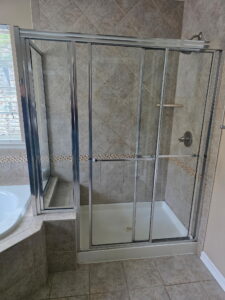
If you have a framed sliding door, the bottom track is often the first place you’ll notice trouble. Tracks collect water, soap scum, hair, and mineral deposits, and over the years the metal can pit, corrode, or stain. Doors that once glided smoothly start to stick, drag, or jump off the rollers.
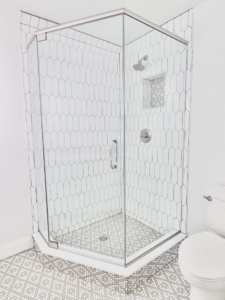
This is one of the biggest reasons homeowners move to frameless glass. A frameless sliding door or a swing door eliminates the bulky bottom track entirely, which means fewer places for grime to hide and far less scrubbing.
Sign 4: The Glass Stays Cloudy No Matter What You Do
Hazy glass can come from two sources. Surface buildup from soap and hard water can usually be removed with the right cleaner. But if your glass stays cloudy or spotted even after a thorough cleaning, the minerals may have etched into the surface. Etched glass can’t be cleaned back to clear, and it makes the whole bathroom look dull and dated.
New glass gives you a chance to choose a look that fits your space, whether that’s ultra-clear glass for a bright, open feel or a textured or frosted option for more privacy. You can explore options on our shower glass styles page.
Sign 5: Hinges Are Loose, Sagging, or Rusting
A door that drags on the floor, won’t close all the way, or swings unevenly usually has a hinge problem. Loose screws can sometimes be tightened, but hinges that are rusted, bent, or pulling away from the wall or frame are a safety concern, especially with heavy glass.
If your door hardware is showing its age, replacing the door lets you upgrade to quality hinges, handles, and clamps in a finish that matches your faucet and fixtures. Browse our shower hardware options to see what’s available.
Other Signs It’s Time for a New Door
A few other red flags worth paying attention to:
- Chips or cracks in the glass, even small ones near the edges
- Caulk that turns moldy again shortly after you replace it
- A dated look, like gold-toned frames or patterned glass, that clashes with the rest of your bathroom
- A door style that no longer works for you, such as a narrow opening or a door that swings into the vanity
Repair or Replace?
Small issues on a relatively new door, like a single worn sweep, can often be fixed. But when you’re dealing with two or more of the signs above, or with an older framed door, replacement is usually the better long-term choice. You’ll avoid chasing one repair after another, and you’ll end up with a door built to fit your exact shower opening.
If you’re weighing your options, our guide on the difference between frameless, semi-frameless, and framed shower doors breaks down how each style compares on appearance, maintenance, and durability.
Replacing Your Shower Door Without a Full Remodel
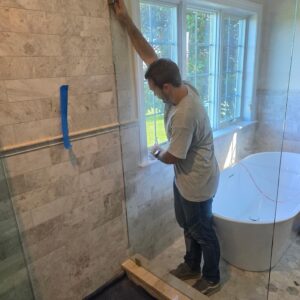
Swapping an old door for a custom frameless one is a contained project. Owner Jim Long personally measures each opening so the glass fits your existing walls and curb, and the installation itself is typically completed in 2 to 4 hours. For a step-by-step look at the process, see how long it takes to install a custom frameless shower door.
Fall is also a smart time to tackle the project. Since a custom door typically takes 7 to 10 business days from measurement to installation, scheduling your estimate now means your bathroom is refreshed and ready before holiday guests arrive.
Frequently Asked Questions
How long do shower doors usually last?
It depends on the door’s construction, your water quality, and how well it’s maintained. Framed doors with tracks and gaskets tend to show wear sooner, while quality frameless doors with good hardware hold up well over the long term.
Can I replace my shower door without replacing my tile?
Yes. In most cases a new door can be measured and installed to fit your existing shower opening, with no changes to tile, plumbing, or fixtures.
Is it worth replacing just the seals on my shower door?
On a newer door in good condition, replacing worn seals can be a reasonable fix. If the door also has corroded tracks, loose hinges, or etched glass, replacing the whole door is usually the better investment.
Can a framed shower door be replaced with a frameless one?
Often, yes. Many framed openings can be converted to a frameless door. During your estimate, we’ll check your walls, curb, and layout to confirm the best option for your space.
What causes cloudy shower glass?
Cloudy glass is usually caused by soap scum and hard water deposits. If the buildup is left too long, minerals can etch into the glass permanently, and at that point cleaning won’t restore clarity.
Is your shower door showing its age? Contact Maryland Frameless Showers for a free estimate and let our team help you find the right replacement door for your bathroom.